
Hypertension & Cardiovascular Risk
Ambulatory Blood Pressure Monitoring (ABPM)
The 24-hour blood-pressure test — what it involves, why it is the most accurate single assessment, and when it is used.
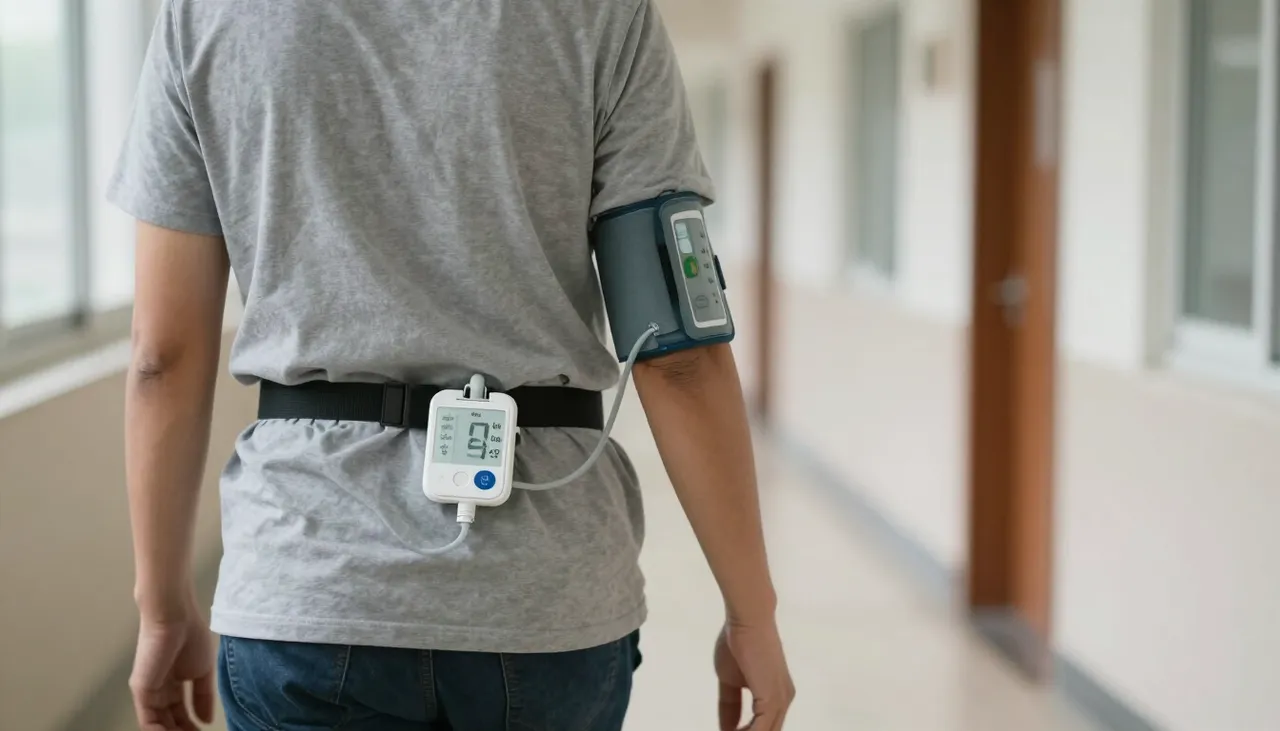
Overview
Ambulatory blood-pressure monitoring (ABPM) is a 24-hour recording of your blood pressure using a small portable device that inflates a cuff at regular intervals while you go about your normal day and sleep. Because it captures dozens of readings across the full day-night cycle, it is considered the most accurate single assessment of blood pressure and is especially valuable when other readings are unclear or contradictory.
This page explains the ABPM test. For self-measurement at home, see Home Blood Pressure Monitoring; for the methods overview, see Blood Pressure Monitoring.
What the test involves
- A small monitor is worn on a belt or strap, connected to a cuff on your upper arm.
- The cuff inflates automatically every 15–30 minutes through the day and less often at night.
- You keep a brief diary of activities, sleep and symptoms.
- You go about your normal day but avoid heavy exercise while the cuff inflates.
- After 24 hours the device is returned and the data is analysed.
Why ABPM is valuable
- It captures your true daytime and nighttime average, not one moment.
- It detects white-coat hypertension (high only in clinic).
- It detects masked hypertension (normal in clinic, high in daily life).
- It shows whether pressure stays high at night, a marker of higher risk.
- It gives a reliable basis for starting, changing or stopping treatment.
When ABPM is used
ABPM is particularly useful when clinic and home readings disagree, when white-coat or masked hypertension is suspected, when a new diagnosis needs confirming, when treatment does not seem to be working despite good clinic readings, or when a single accurate assessment is needed before a treatment decision. It is not needed for every patient — home monitoring is often sufficient for routine follow-up.
Understanding the results
The report gives your average daytime, nighttime and 24-hour pressures, the proportion of readings that are high, and how much the pressure dips at night. A healthy nighttime dip is reassuring; a “non-dipper” pattern (pressure staying high at night) is associated with higher cardiovascular risk and may influence treatment choices. Dr. Nayak explains what your specific pattern means for your care.
How we help
Dr. Nayak arranges ABPM when it is genuinely needed, interprets the full report in the context of your overall risk, and uses it to make confident decisions about diagnosis and treatment. The result is explained in plain terms so you understand what your 24-hour pattern means. Consultations are available in-clinic in Bhubaneswar and over teleconsultation.
Related conditions and patient concerns
ABPM is closely tied to confirming diagnosis and resolving discrepant readings. These related pages give context.
Explore more
Related conditions
Explore more
Related services
Take action now
Schedule your consultation today with Dr. Nayak
Don't wait to get the healthcare you deserve. Book your appointment in just a few clicks.