
Hypertension & Cardiovascular Risk
Home Blood Pressure Monitoring
A practical guide to checking your own blood pressure at home — choosing a monitor, measuring correctly, and keeping a useful record.
Overview
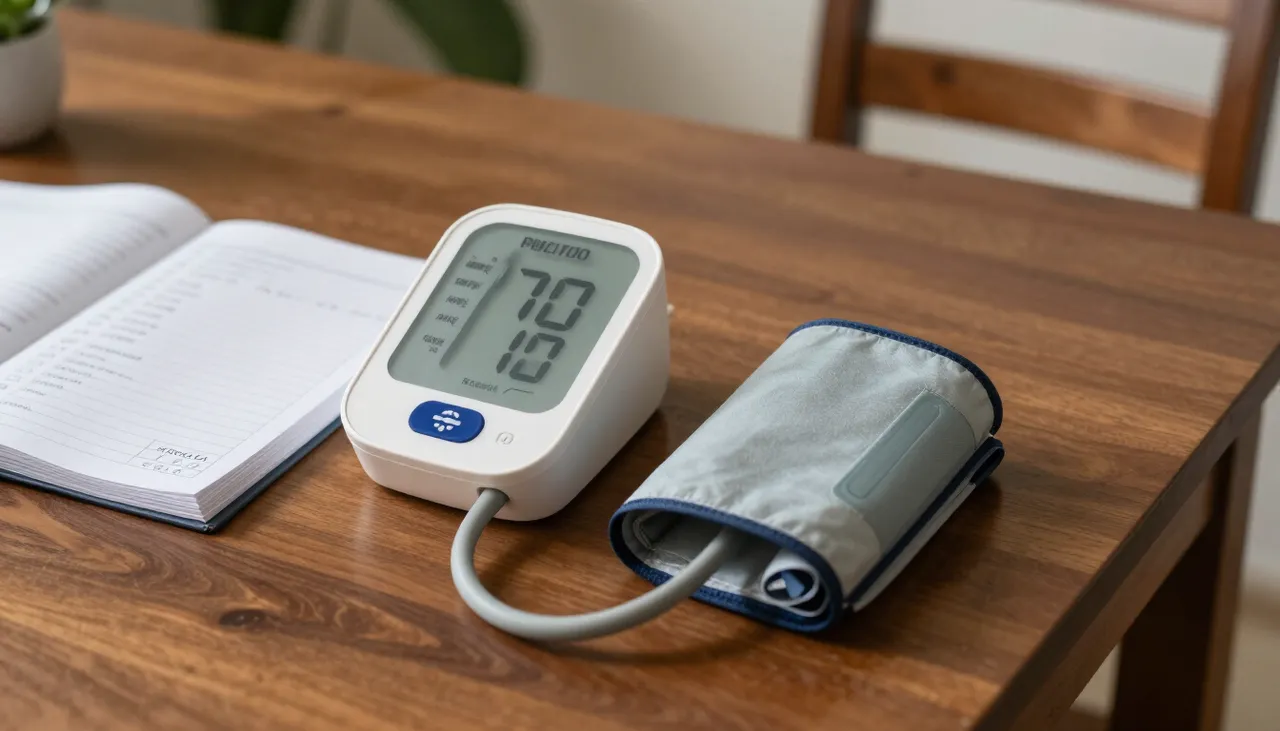
Home blood-pressure monitoring is one of the most useful tools in hypertension care. Taking your own readings over several days gives a far truer picture than occasional clinic readings, helps confirm a new diagnosis, reveals white-coat or masked patterns, and lets you and your doctor judge whether treatment is working. Done correctly, it puts you in control of your own care.
This page is the practical guide to self-measurement. For the broader methods overview, see Blood Pressure Monitoring; for the 24-hour test, see Ambulatory Blood Pressure Monitoring.
Choosing a monitor
- Use an automatic upper-arm monitor — wrist monitors are less reliable.
- Choose a validated, clinically tested device.
- Ensure the cuff fits your arm — a wrong size gives false readings.
- Avoid finger monitors, which are inaccurate.
- Have the device checked for accuracy periodically.
How to measure correctly
- Sit quietly for five minutes beforehand, bladder empty.
- Back supported, feet flat on the floor, arm supported at heart level.
- No caffeine, exercise or smoking for 30 minutes before.
- Take two readings about a minute apart and record both.
- Measure at consistent times — morning and evening are typical.
- Record the date, time, readings and any symptoms.
When and how often
For confirming a new diagnosis, readings are usually taken morning and evening for 4–7 consecutive days. For long-term follow-up, a few days before each appointment is enough. Very frequent checking throughout the day is not helpful and can increase anxiety — a steady routine is more useful than constant measuring.
Keeping a useful record
A simple written or app-based log of date, time, readings and any symptoms lets Dr. Nayak see your true average and pattern. Bring the full record (not just the highest or lowest readings) to your appointment. Honest recording — including any missed doses — leads to better decisions.
How we help
Dr. Nayak advises on a suitable validated monitor and cuff, teaches correct technique, and uses your home record to confirm diagnoses and guide treatment. He helps you interpret the readings so you understand what they mean and when to seek advice. Consultations are available in-clinic in Bhubaneswar and over teleconsultation.
Related conditions and patient concerns
Home monitoring connects to diagnosis, white-coat effect and overall follow-up. These related pages help.
Explore more
Related conditions
Explore more
Related services
Take action now
Schedule your consultation today with Dr. Nayak
Don't wait to get the healthcare you deserve. Book your appointment in just a few clicks.