
Diabetes & Metabolic Health
How to Use and Store Insulin
Learn the main types of insulin, how to inject with a pen or syringe, how to store insulin in hot weather, and what to do if blood sugar drops.
Clinically reviewed by Dr. Anil Kumar Nayak ·
What are the different types of insulin?
- Mealtime insulin includes rapid-acting and short-acting (regular) insulin. It helps manage the rise in blood sugar around meals. The timing in relation to food varies by product.
- Background (basal) insulin includes intermediate-acting insulin such as NPH and long- or ultra-long-acting insulin. It helps keep blood sugar steady between meals and overnight.
- Premixed insulin combines a mealtime and a longer-acting component in a fixed ratio. Use the exact mix and meal schedule on your prescription.
Insulin may come in a disposable prefilled pen, a cartridge for a reusable pen, or a vial for use with an insulin syringe. Read the name and strength on the label every time, especially if you use both mealtime and basal insulin. Pen and cap colours vary.
How to inject insulin with a pen
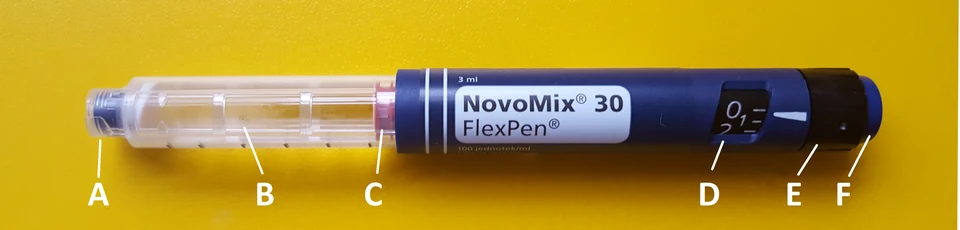
Example of an insulin pen with labeled parts by Wesalius (photograph) and Berchanhimez (labels). Original photo · CC BY 4.0 · Resized and converted to WebP.
- Wash and dry your hands. Check the insulin name, strength, expiry date and appearance. Some products are clear and others are naturally cloudy. Prepare cloudy insulin exactly as the leaflet directs. Ask your pharmacist if it looks different from usual.
- Attach a new, compatible needle and remove its caps as directed. Do the flow check in your pen leaflet. If the pen fails the check, follow the troubleshooting steps or ask a pharmacist before injecting. Check the prescribed number of units in the dose window.
- Use the injection area and technique your care team showed you. Inject under the skin, press the dose button and keep the needle in place for the time in your pen leaflet before withdrawing it.
- Remove the needle as directed and put it straight into a puncture-resistant sharps container. Replace the pen cap before storing it. Keep the pen for your own use, even when the needle has been changed.
How to use an insulin vial and syringe
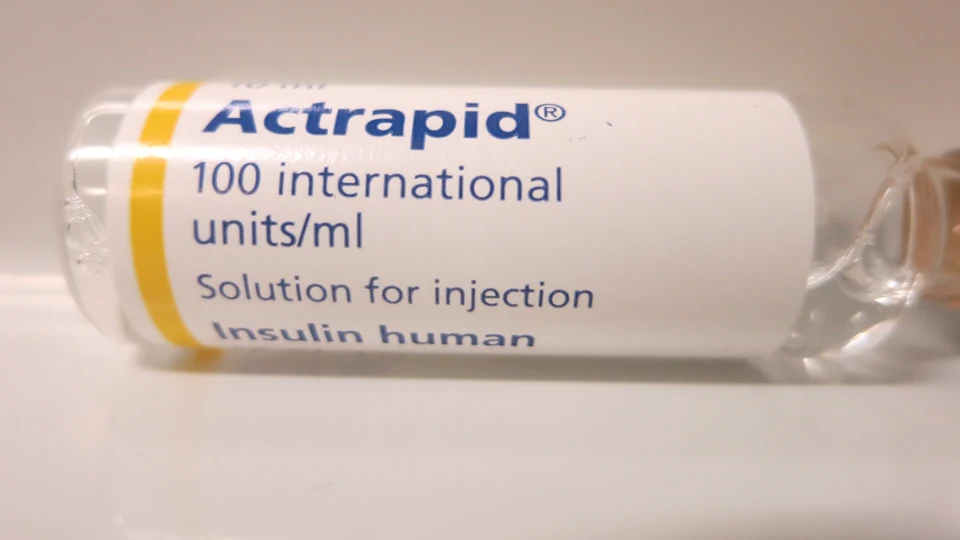
Actrapid vial, an example of U-100 insulin by John Campbell. Original photo · CC0 1.0 · Resized and converted to WebP.
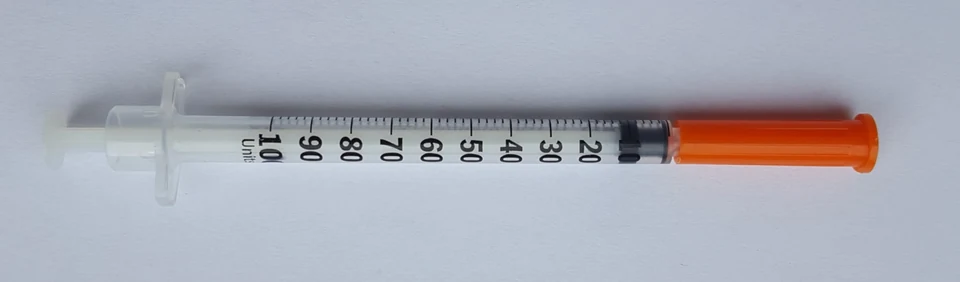
Example of an insulin syringe with unit markings by Wesalius. Original photo · CC BY 4.0 · Resized and converted to WebP.
- Wash and dry your hands. Check the vial label, expiry date and appearance. Clean the rubber stopper with an alcohol swab and let it dry. Use a new sterile insulin syringe.
- Draw up the prescribed units as your care team showed you. Remove air bubbles, then recheck the unit mark at eye level. Mix two insulins in one syringe only if your care team prescribed the combination and showed you how to prepare it.
- Inject under the skin at the site and angle you were shown. Put the used needle and syringe straight into a puncture-resistant sharps container. Ask your clinic or pharmacy how to dispose of the container locally.
Common injection areas include the abdomen and outer thigh. Move to a fresh spot within the area as advised and avoid lumps, scars or irritated skin. If you have been injecting into a lump, contact your care team promptly about checking blood sugar more often when you switch to healthy skin. Insulin can absorb more reliably there and your blood sugar may drop.
How to store insulin at home and while travelling
- Keep unopened insulin refrigerated, usually at 2–8 °C, as the pack directs. Keep it away from the freezer compartment and discard insulin that has frozen.
- Check the leaflet for the in-use temperature limit, whether refrigeration is allowed, and when to discard your pen, cartridge or vial. The time limit may start when it leaves the refrigerator or when you first use it. Mark the discard date and throw the insulin away by that date or the printed expiry, whichever comes first.
- Keep insulin out of direct sunlight and hot cars. For travel in hot weather, ask a pharmacist how to carry your product in an insulated bag. Keep the insulin from touching ice or frozen packs directly.
- After a power cut or suspected heat exposure, ask a pharmacist whether the insulin is still usable and how to obtain a replacement if needed.
What to do if your blood sugar goes low
Shaking, sweating, hunger, dizziness or confusion can be signs of low blood sugar. If your glucose is below 70 mg/dL and you are awake and able to swallow, follow your low-glucose plan. A common adult plan is to take glucose tablets totalling 15 g, recheck after 15 minutes and repeat if it is still low. Get medical help if the low persists after repeating treatment.
Sources
- NIDDK — Types of insulin and ways to take it
- RSSDI — Clinical recommendations for type 2 diabetes in India
- CDC — Ways to take insulin and rotate injection sites
- CDC — Safe insulin injection practices
- MedlinePlus — Giving an insulin injection
- DailyMed — U.S. insulin glargine label and injection-site safety
- U.S. FDA — Insulin storage and handling during emergencies
- NIDDK — Recognising and treating low blood glucose
- American Diabetes Association 2026 — Low blood glucose treatment
- Government of India — 112 emergency response
Explore more
Related conditions
Explore more
Related services
Take action now
Schedule your consultation today with Dr. Nayak
Don't wait to get the healthcare you deserve. Book your appointment in just a few clicks.