
Palpitations & Cardiovascular Symptoms
Abnormal Pulse
A pulse that feels too fast, too slow, too weak or irregular — how it is examined, the common causes, and when it needs prompt assessment.
Overview
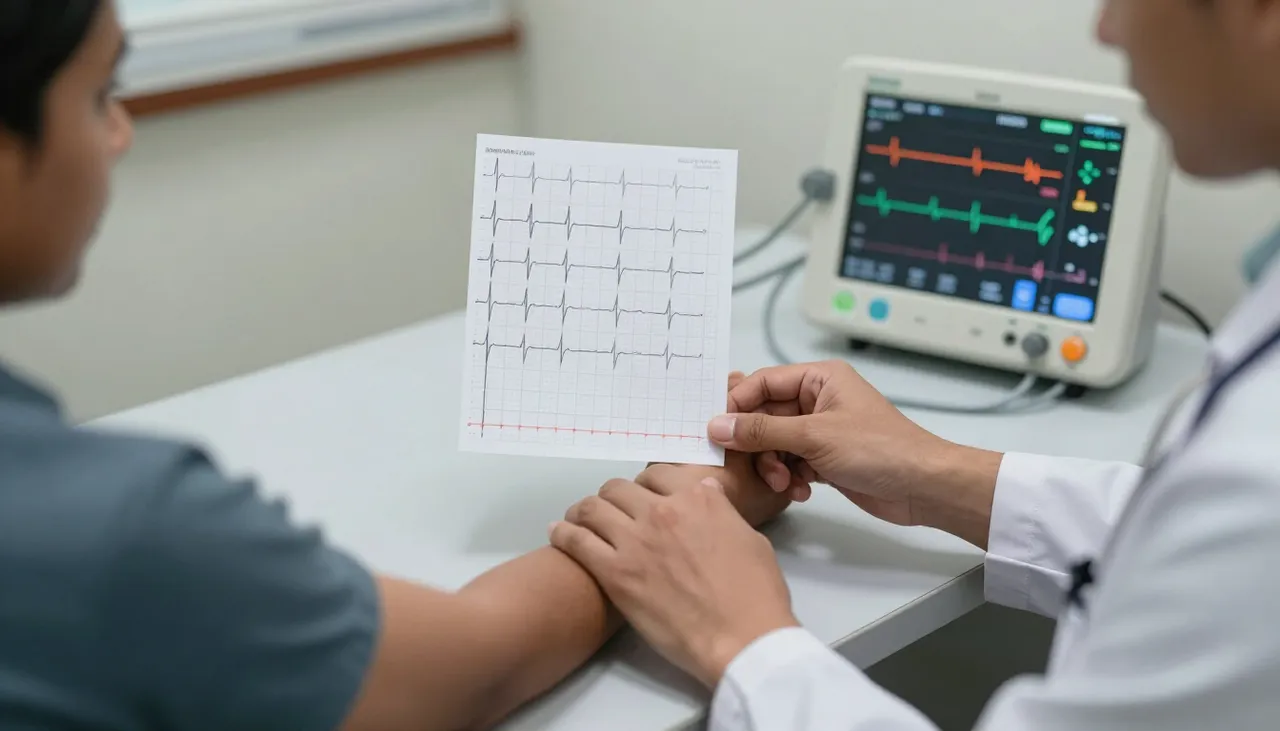
An abnormal pulse is one that feels too fast, too slow, too weak, too forceful, or irregular when checked at the wrist or neck. It is often found during a routine examination or self-check rather than as a symptom, and it can be the first clue to a rhythm problem, a thyroid disorder, anaemia, dehydration, or a medication effect. Because the pulse reflects the heart’s rhythm and strength, an abnormal finding is assessed rather than ignored, even when the person feels well.
Common causes
- A fast pulse — see Fast Heartbeat and High Resting Heart Rate.
- A slow pulse — see Low Heart Rate.
- An irregular pulse — commonly ectopic beats or atrial fibrillation; see Irregular Heartbeat Sensation.
- A weak or thready pulse — dehydration, low blood pressure or heart failure.
- A bounding pulse — an over-active thyroid, fever, anaemia or a leaky heart valve.
- Medication effects.
Symptoms and associated features
The finding itself is the abnormal pulse. Associated features guide the cause: a fast irregular pulse with breathlessness suggests atrial fibrillation; a slow pulse with dizziness suggests a conduction problem; a weak pulse with low blood pressure suggests dehydration; and a bounding pulse with weight loss suggests an over-active thyroid. An abnormal pulse with chest discomfort, dizziness, fainting or breathlessness needs prompt assessment.
Evaluation and investigations
Evaluation combines a careful pulse and blood-pressure examination with an ECG and targeted blood tests — thyroid function, complete blood count, electrolytes and blood sugar. A Holter monitor is arranged when the abnormality is intermittent. See ECG Evaluation for Symptoms and Abnormal Test Results.
Management overview
Management treats the cause. Rhythm problems are managed with rate or rhythm control; a thyroid disorder or anaemia is treated; dehydration is corrected; medication effects are reviewed; and structural heart problems are directed to specialist cardiac care.
Follow-up and monitoring
Follow-up confirms the pulse has normalised and any underlying cause is controlled. Persistent abnormalities are reviewed and referred for specialist cardiac assessment when appropriate.
Warning signs — seek urgent care
- An abnormal pulse with chest pain, dizziness, fainting or breathlessness — urgent.
- A very fast, very slow or very irregular pulse that does not settle — urgent.
- An abnormal pulse with collapse or loss of consciousness — emergency.
How we help
Dr. Nayak examines an abnormal pulse with a structured assessment, an ECG and targeted blood tests, treats the underlying cause, and refers for specialist cardiac care when needed. Consultations are available in-clinic in Bhubaneswar and over teleconsultation.
Related conditions and patient concerns
Explore more
Related conditions
Explore more
Related services
Take action now
Schedule your consultation today with Dr. Nayak
Don't wait to get the healthcare you deserve. Book your appointment in just a few clicks.