
Liver & Fatty Liver Health
Liver Fibrosis Risk Assessment
How liver scarring (fibrosis) is estimated non-invasively — what FIB-4 and elastography (FibroScan) are, who needs them, and what the results mean.
Overview
Fibrosis means scarring of the liver. For most people with fatty liver (MASLD), the risk of serious scarring is low, but a minority progress — and identifying who is at risk is one of the most important parts of liver assessment. Today this is done largely without a biopsy, using non-invasive tools that estimate how much scarring is likely present. This page explains how fibrosis risk is assessed; the underlying conditions are covered on their own pages.
Why fibrosis risk matters
Simple steatosis (fat without significant inflammation) carries a low risk of progression. When inflammation is present (steatohepatitis), scarring can develop over years, and a small proportion progress to cirrhosis. Knowing the fibrosis risk determines how closely the liver is monitored and whether referral for specialist care is needed. People with diabetes, obesity or metabolic syndrome are at higher risk and often warrant assessment.
Non-invasive assessment tools
- FIB-4 score — a simple calculation from age, AST, ALT and platelet count; used to triage low, intermediate or high risk.
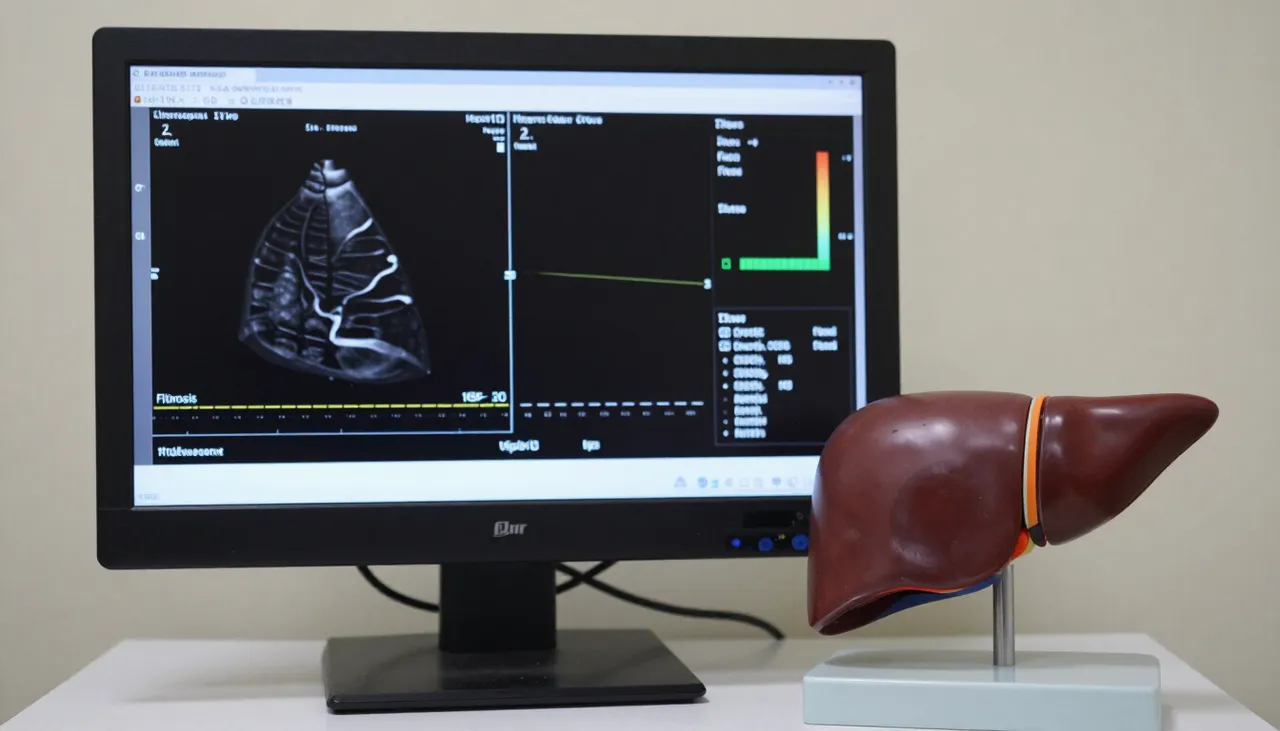
- Liver elastography (FibroScan) — an ultrasound-based measure of liver stiffness, which reflects scarring.
- Imaging-based scores and, in selected cases, MRI-based assessment.
- Blood-based fibrosis markers in selected cases.
What the results mean
A low FIB-4 or low stiffness score is reassuring and usually means routine monitoring is enough. An intermediate score often leads to elastography to refine the estimate. A high score prompts referral for specialist assessment, which may include a liver biopsy in carefully selected cases. The result is always interpreted alongside the overall clinical picture, not in isolation.
Who should be assessed
- People with fatty liver who also have diabetes or obesity.
- Those with persistently raised liver enzymes.
- People with metabolic syndrome.
- Anyone with an ultrasound suggesting more than simple fatty change.
Management overview
For low-risk individuals, lifestyle measures and periodic re-assessment are sufficient. For intermediate or high risk, a structured plan — weight loss, metabolic control, alcohol avoidance, and closer monitoring or specialist referral — is arranged. The aim is to prevent progression and catch any advance early.
Warning signs — seek prompt care
- Jaundice, dark urine or pale stools.
- Swelling of the abdomen or legs.
- Easy bruising or bleeding.
- Confusion or drowsiness with known liver disease.
How we help
Dr. Nayak calculates fibrosis risk, arranges elastography where indicated, interprets the result in context, and builds a monitoring or referral plan. Consultations are available in-clinic in Bhubaneswar and over teleconsultation.
Related conditions and patient concerns
Explore more
Related conditions
Explore more
Related services
Take action now
Schedule your consultation today with Dr. Nayak
Don't wait to get the healthcare you deserve. Book your appointment in just a few clicks.