Liver & Fatty Liver Health
Hepatomegaly / Enlarged Liver
What an enlarged liver means, how it is found on examination or ultrasound, common causes, and the assessment that follows.
Overview
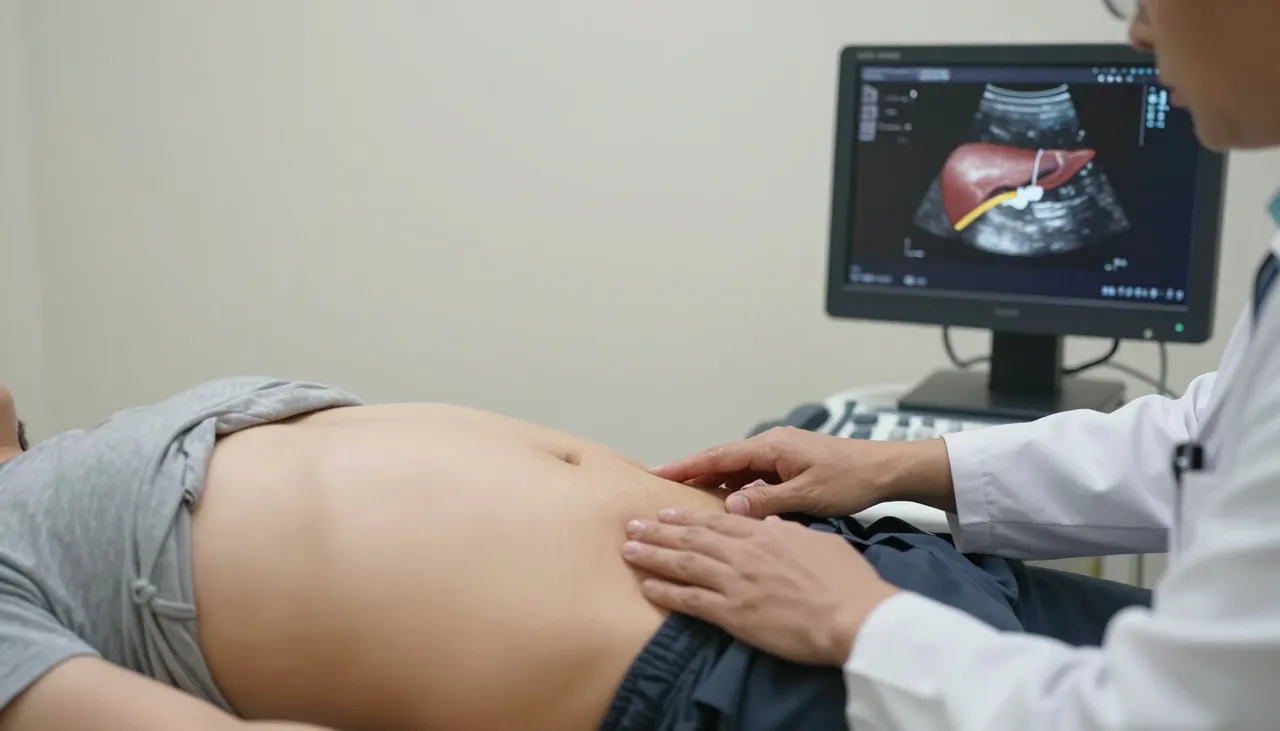
Hepatomegaly means an enlarged liver. It may be felt on a physical examination or reported on an ultrasound or scan. The liver can enlarge for many reasons, and an enlarged liver by itself is not a diagnosis — it is a sign that points towards an underlying cause. In many cases the enlargement is mild and related to fatty liver; in others it can reflect inflammation, congestion, or other disease. The aim of assessment is to find why the liver is enlarged and to treat the cause.
How it is found
Hepomegaly may be noticed when a doctor examines the abdomen, or it may be reported on an ultrasound, CT or MRI arranged for other reasons. The report may say “hepatomegaly”, “enlarged liver”, or give an increased liver span. Sometimes the liver edge is palpable in slim people without any disease, so the finding is always interpreted alongside symptoms and tests.
Common causes
- Fatty liver (MASLD) — the commonest cause today.
- Alcohol-related liver disease.
- Viral hepatitis.
- Heart failure causing liver congestion.
- Metabolic conditions such as diabetes and high cholesterol.
- Other less common causes including iron overload and infiltrative disease.
Symptoms
Many people with an enlarged liver have no symptoms. Some notice a feeling of fullness or a dull ache in the upper-right abdomen, a sense of early fullness when eating, or tiredness. Symptoms such as jaundice, swelling or easy bruising suggest more significant disease and need prompt assessment.
Evaluation and investigations
Evaluation includes a full liver function test panel, blood sugar or HbA1c and a lipid profile, a viral hepatitis screen, an alcohol and medicine review, and an abdominal ultrasound (often already done). Where the cause is not clear, further imaging or selected blood tests may be arranged. Fibrosis risk is estimated where appropriate. A heart-related cause is considered when there are signs of heart failure.
Management overview
Management is directed at the cause. For fatty liver it is weight loss, activity and metabolic control; for alcohol-related disease, alcohol cessation; for viral hepatitis, specific treatment; and for heart-related congestion, treatment of the heart condition. The liver size and tests are re-checked over time to confirm improvement.
Warning signs — seek prompt care
- Jaundice, dark urine or pale stools.
- Persistent or severe upper-right abdominal pain with fever.
- Swelling of the abdomen or legs.
- Easy bruising or bleeding.
How we help
Dr. Nayak interprets the finding alongside the tests, identifies the cause, and builds a cause-directed plan with follow-up. Consultations are available in-clinic in Bhubaneswar and over teleconsultation.
Related conditions and patient concerns
Explore more
Related conditions
Explore more
Related services
Take action now
Schedule your consultation today with Dr. Nayak
Don't wait to get the healthcare you deserve. Book your appointment in just a few clicks.